Fish-Centric Design Practice – A design game and Encounters
Lara Giordana, Alvise Mattozzi, Micol Rispoli
How to cite: Giordana, Lara, Mattozzi, Alvise & Rispoli, Micol (2026) Fish-Centric Design Practice – A Design Game and Encounters. In: Dialoguing Species | Dialoguing Practices, https://dialoguing-species.eu/dialoguing-practices-archive/fish-centric-design/, ISBN: 9791298510227
What happens when fish become the starting point of a design process?
The Fish-Centric Design practice has been developed to open a space for fish-centred design and for exploring the ecological relations involved in interventions in aquatic environments, particularly in engineering and infrastructure design. Developed in collaboration with Nonhuman Nonsense, and drawing on the expertise of a hydraulic engineer and a naturalist, the practice uses a game-based process to invite participants to take fish as clients of an engineering project: nonhuman actors, whose needs and requests provide the starting point for the game. By placing fish at the centre of the design process as clients, the game shifts the focus beyond the human-centred approach that usually underpins engineering design, and holds together actors, ecological relations and design considerations that are addressed separately across different forms of expertise. A mission, a game board and a set of cards provide the framework for the activity, progressively introducing fish clients, other stakeholders, information and events that shape and complicate the design process.
Rather than beginning with a technical problem and searching for a solution, participants are invited to construct and progressively rethink a design situation from the perspective of its more-than-human inhabitants. In doing so, the practice makes visible actors, relations, needs and consequences that might otherwise remain outside the engineering design process.
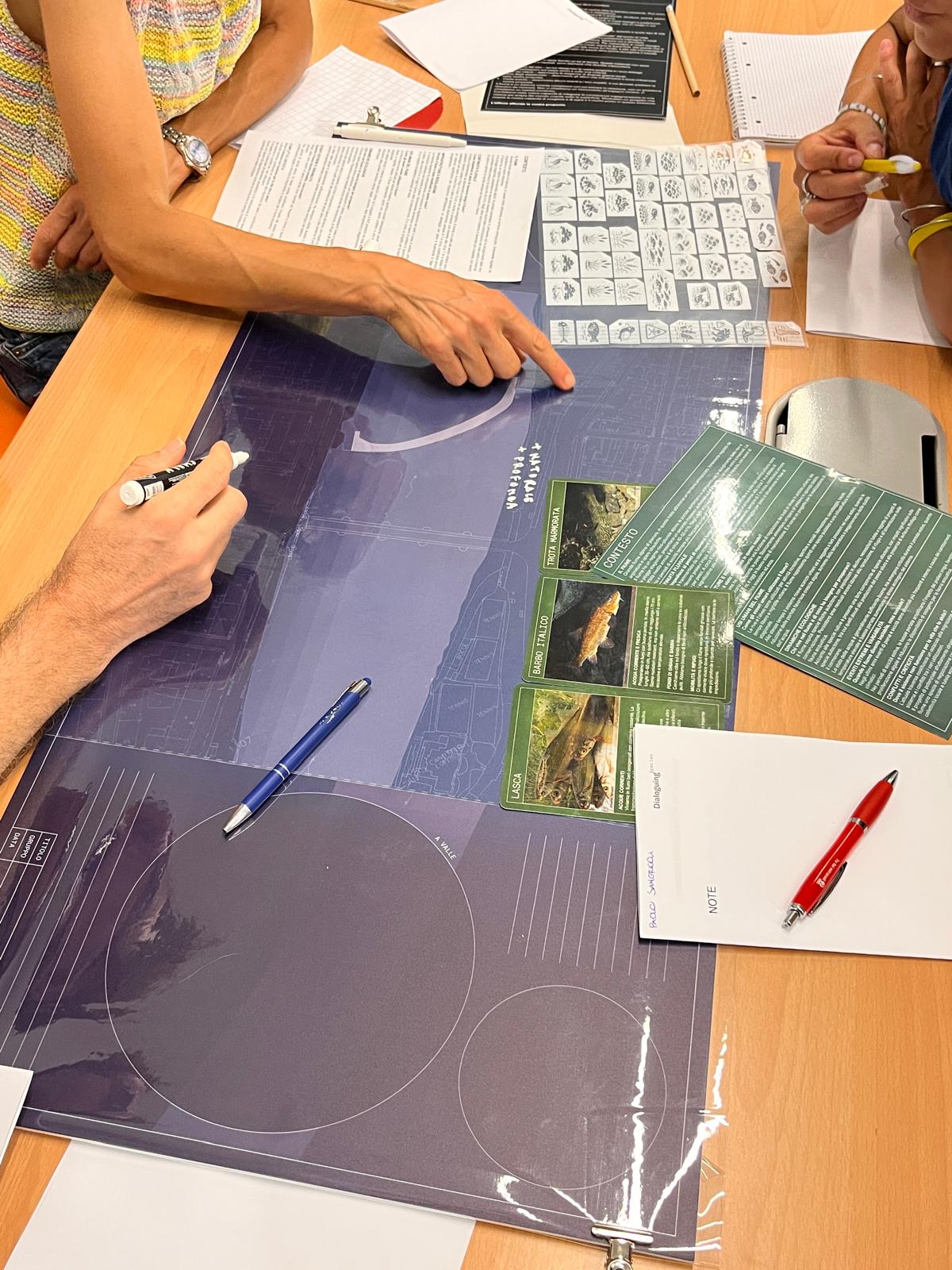
1. Game board, client cards, and river context card
How Fish-Centric Design Works
The practice is structured around a mission in which fish are positioned as the clients commissioning a design project. The practice experiments with giving the fish a voice. In one of the Encounters, a synthetic voice was used to read the mission, introduced as a possible approximation of what an AI-assisted translation of the fish’s voice might sound like. Rather than claiming to reproduce a nonhuman voice, the device foregrounds the question of how — and with what limitations — humans might attempt to listen to and translate more-than-human perspectives.
Together with the mission, participants receive a game board that provides the map on which the project is developed. The board draws on a familiar tool of professional design practice: the site map used to situate an intervention. Here, the site map is transformed into a game board, providing a spatial framework within which the design can be progressively developed and questioned. The board establishes the initial situation, while information about the river stretch, its characteristics and behaviour, and cards describing the different fish clients provide the starting conditions for the design. Rather than designing for an abstract “fish”, participants encounter different fish clients with specific habits and needs, which may not necessarily be compatible with one another.
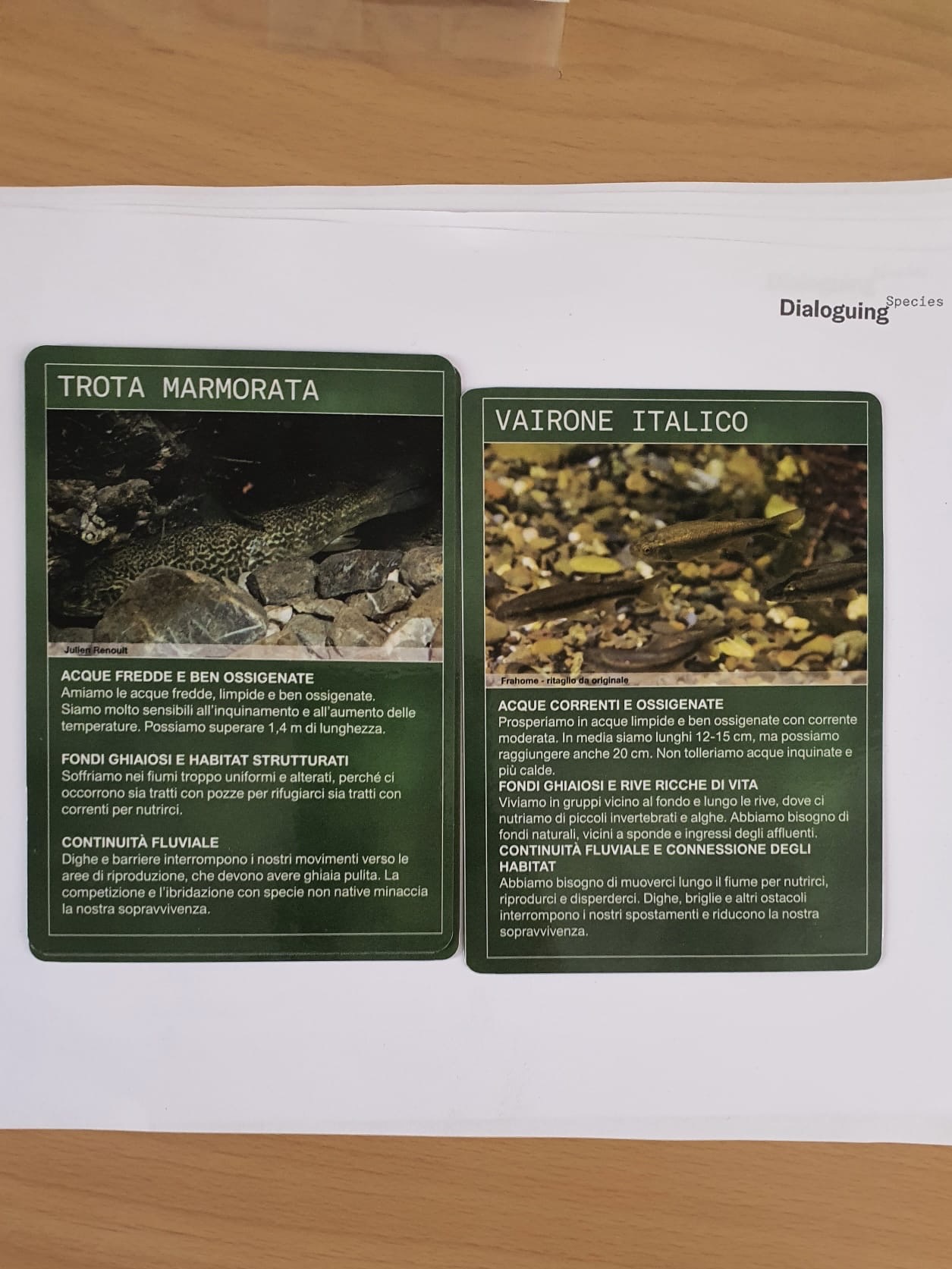
2. Client cards
The design process unfolds through several stages. As the project develops, new information, stakeholders and events are introduced, requiring participants to revise their initial proposal or at least consider how the new circumstances affect it. Human and more-than-human stakeholders progressively enter the situation, drawing attention to the fact that a river is not a static entity: what happens upstream has consequences downstream, and interventions affect multiple inhabitants and users of the river. As the situation evolves, the board is progressively populated with new actors, environmental features, infrastructures and relations. In this way, a familiar site map becomes a tool for re-mapping the design situation, prompting participants to consider relations and consequences that extend beyond the boundaries of the intervention.
The aim is to respond to the requests of the fish clients, while also taking into account the needs of other river inhabitants and users. These needs may conflict, generating frictions and difficult choices. The practice does not ask participants to find the “right” solution. Instead, it uses the design process to raise questions about whose needs are considered, how different interests are negotiated, and what consequences a design decision might produce across an interconnected river system.
The material elements of the kit support this re-mapping process. Stickers and other visual elements allow participants to add, move and combine actors, environmental features, infrastructures and relations as the situation evolves. The emerging design thus remains open to revision rather than becoming a fixed representation of a technical object.
The event cards also introduce possible future scenarios, including the continuing increase in temperatures and the extinction of local fish populations. In this way, the practice extends the design process beyond the immediate present and asks participants to consider the temporal life of designed artefacts in changing ecological conditions, and how these changing conditions might transform both the river and the possibilities for intervention.
Throughout the process, specific moments and tools for reflection and sharing are introduced. These interrupt the flow of designing to give participants space to articulate their reasoning, compare perspectives and consider the implications of the choices they have made.
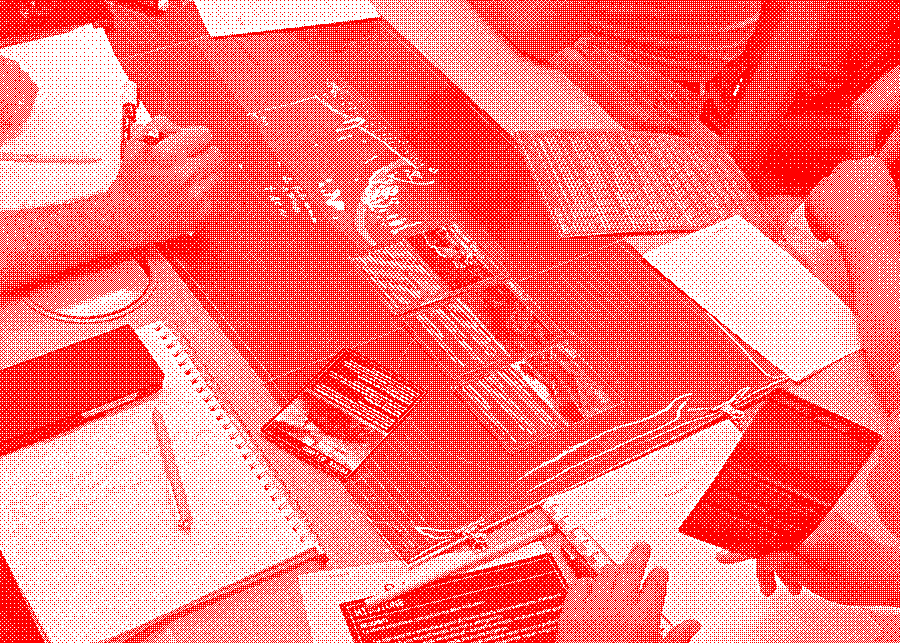
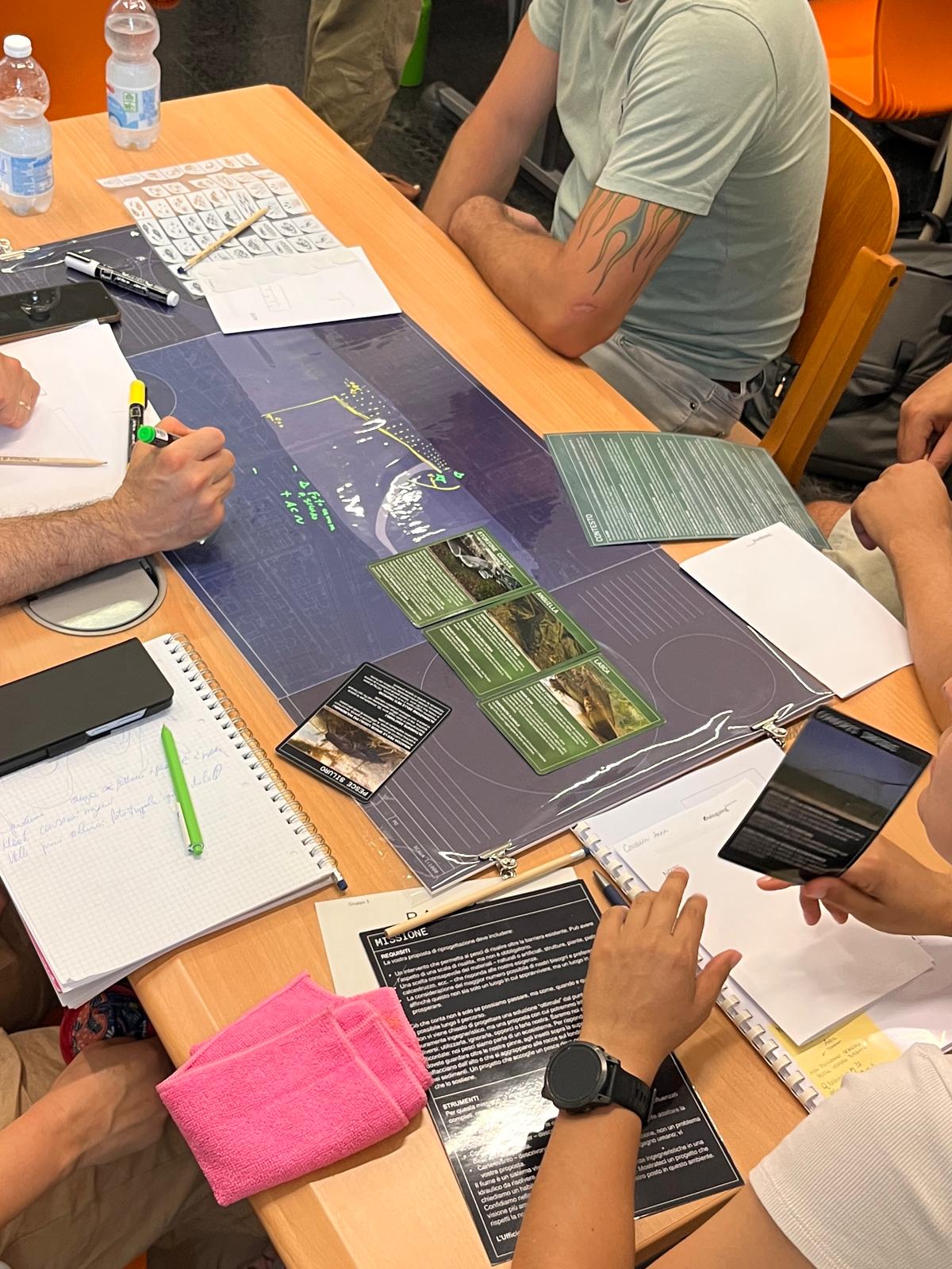
3. A new stage of the design process
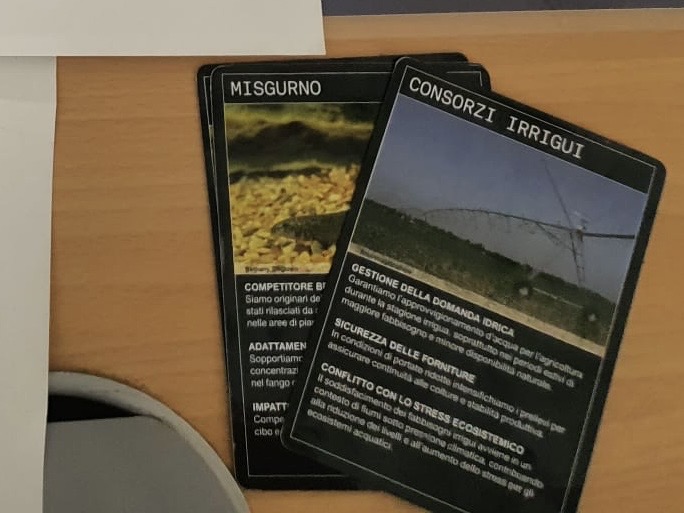
4. Stakeholder cards
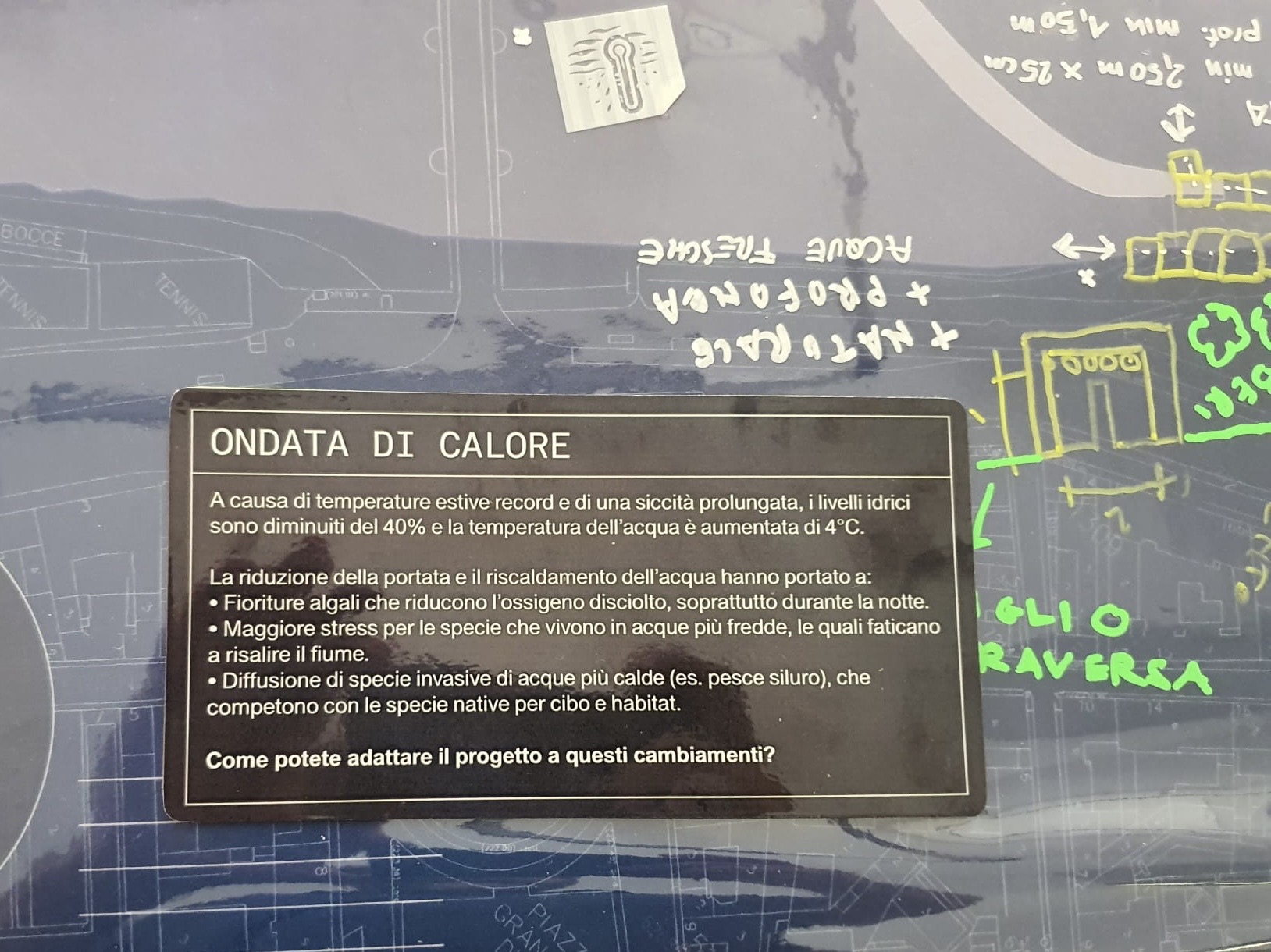
5. Event card
Encounters
Fish-Centric Design Encounters last approximately three hours and can be embedded in professional training courses or university teaching. Participants work in small groups on different but related design situations, using a shared framework while working with different combinations of fish clients, stakeholders and environmental contexts. A final plenary discussion brings the groups together to compare their designs, making visible both different perspectives on related situations and recurring issues across different contexts. This collective reflection further expands the design situation, allowing participants to encounter perspectives and relations that were not part of their own group’s scenario.
In training contexts, Encounters create dialogue between participants with diverse educational backgrounds, professional expertise and working experiences connected to rivers and aquatic environments. The practice can also be used within university courses for
environmental and hydraulic engineering students, familiarizing them with the complexity of relations within aquatic environments and encouraging them to attune to the more-than-human worlds in which engineering interventions are situated. When used with students who are still developing their design skills, the timing of the practice within a course and the degree of guidance provided may need to be adapted.
Fish-Centric Design is a practice for reorienting attention, making multispecies relations tangible, and creating a space in which technical, biological and more-than-human perspectives can enter into dialogue through design.
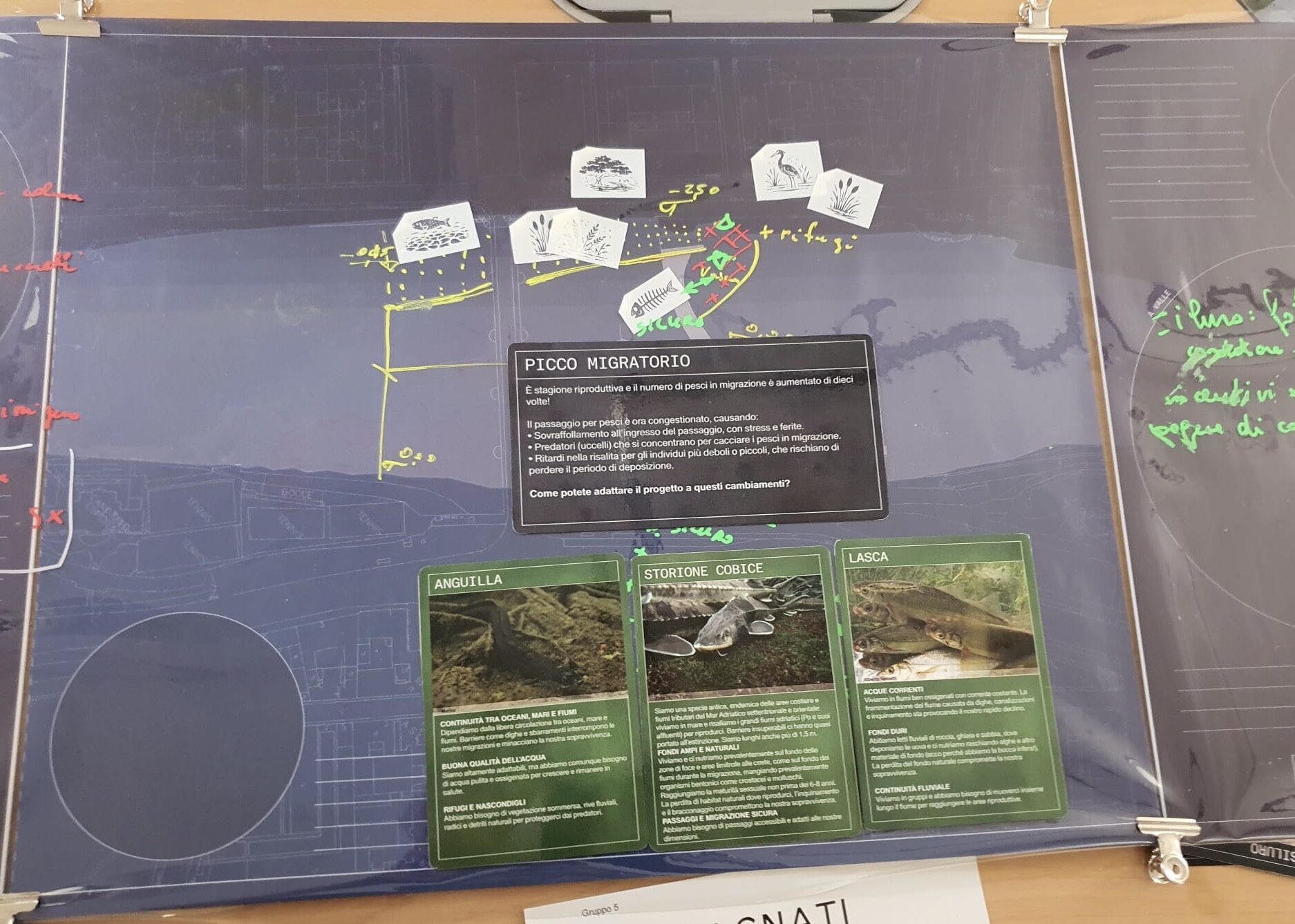
6. Game kit
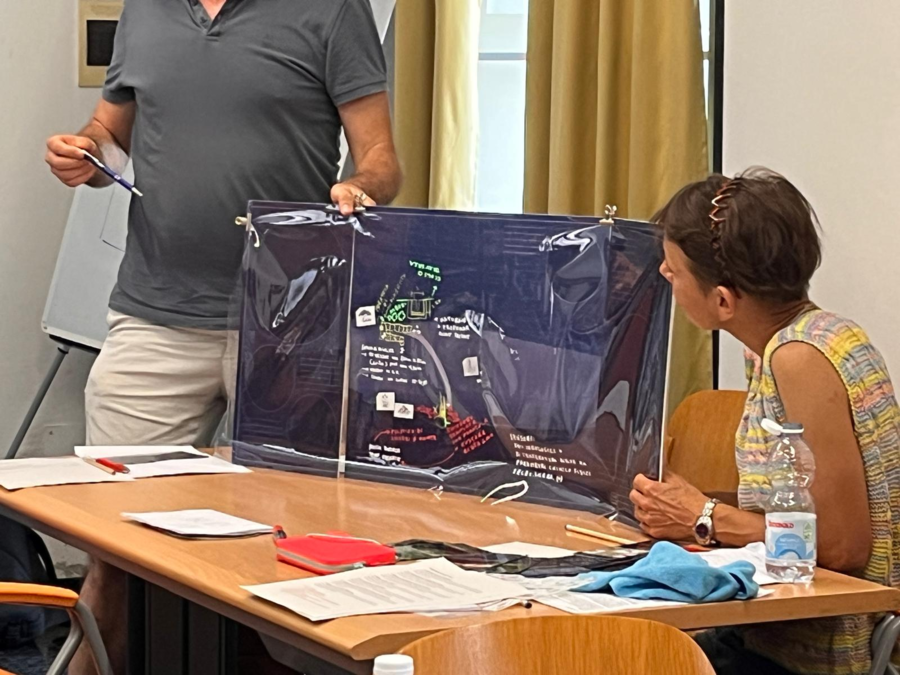
7. Plenary discussion
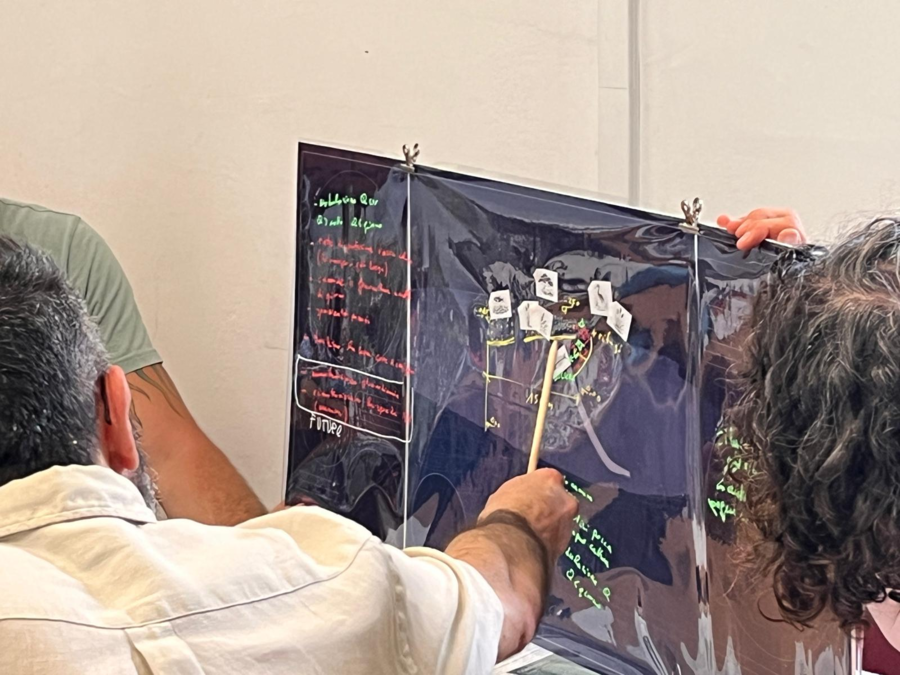
8. Plenary discussion
Pictures taken in Turin on 29/06/2026. Pictures 1, 3, 7 & 8 by Lara Giordana. Pictures 2, 4, 5 & 6 by Alvise Mattozzi.