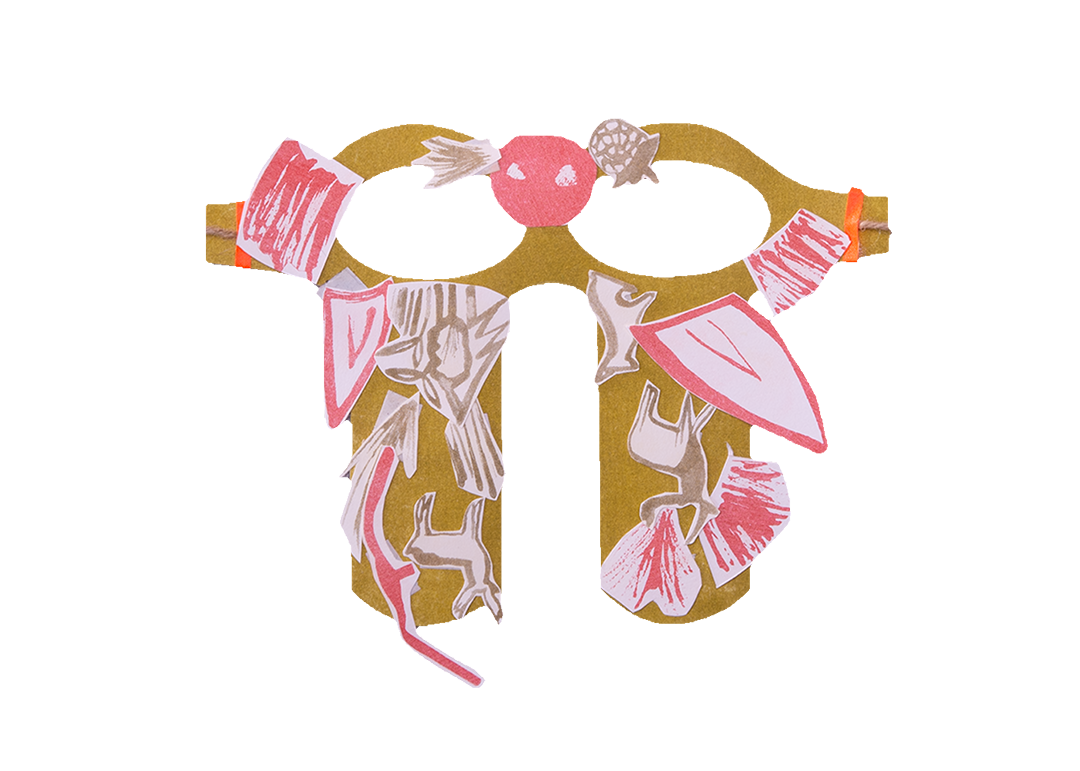
Crafty Masking Practice ‒ Dialogue facilitation kit and Encounters
Elisabeth Tauber, Seçil Uğur Yavuz, Lisa Maria Zellner
How to cite: Tauber, Elisabeth, Uğur Yavuz, Seçil & Zellner, Lisa Maria (2025) Crafty Masking Practice ‒ Dialogue Facilitation Kit and Encounters. In: Dialoguing Species | Dialoguing Practices, https://dialoguing-species.eu/dialoguing-practices-archive/crafty-masking-practice-dialogue-facilitation-kit-and-encounters/, ISBN: 9791298510227
Masking has been developed to open space for dialogue and the exploration of interspecies relationships with the returned mammal predator Canis lupus and with freshwater fish affected by river dam construction for electric power production. As a dialoguing practice, crafty masking is rooted in anthropological analyses of masks as media of ontological transformation, art and design practices with masks as embodied interventions in immersive enactment and perception shifting processes, and our ethnographic fieldwork with anglers, ecological engineers, ecologists, freshwater fish, forest rangers, herders, hunters, ichthyologists, museologists, wildlife monitors, and wolves.
With its focus on enabling co-living with more-than-humans, crafty masking explores through specifically designed three-hour encounters with field experts. Through the interweaving of professional and disciplinary perspectives, the practice has been elaborated through artful methods, creating a protected space for exploring previously unspoken relationships with other disciplines and more-than-humans such as freshwater fish and wolves.
How Masking Works
Masking acts as an embodied medium that interrupts habitual anthropocentric patterns of thought and perception, opening a liminal space in which other forms of relatedness become experienceable. Through the process of crafting a new mask and wearing the self-crafted creature, a temporary shift in subject position becomes possible. This enables latent human-animal relations ‒ ranging from emotional attachments, professional roles to conflict-laden encounters ‒ not only to be reflected upon rationally, but to be corporeally and relationally explored and newly articulated.
Masking Practice
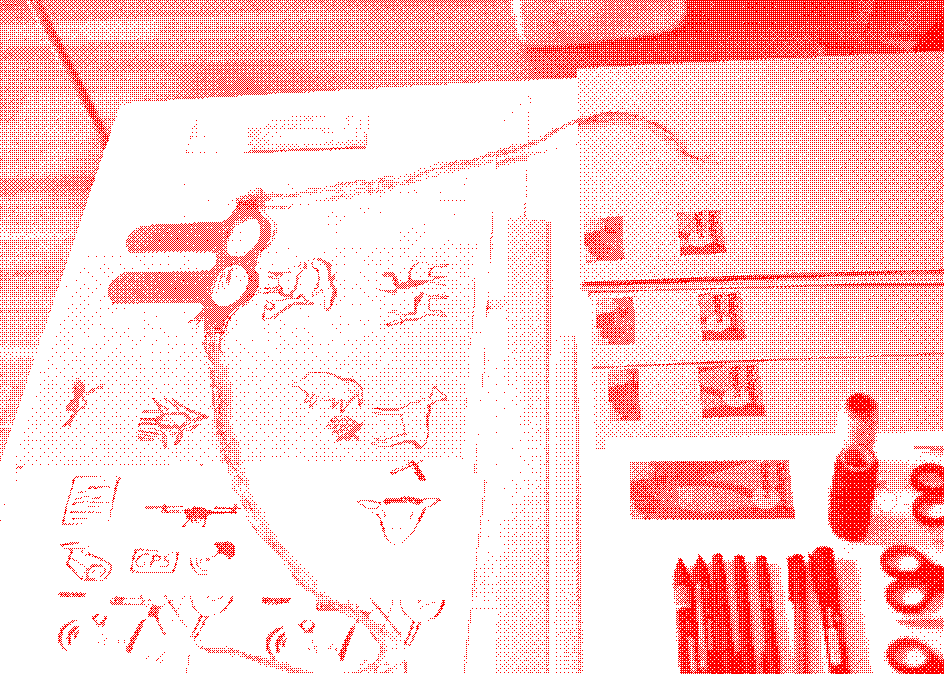
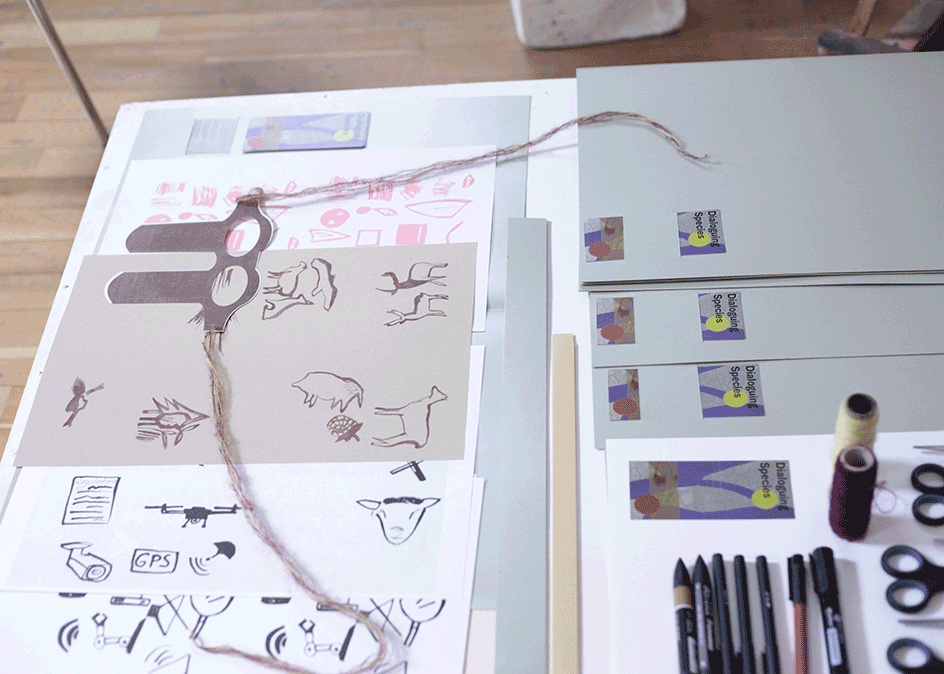
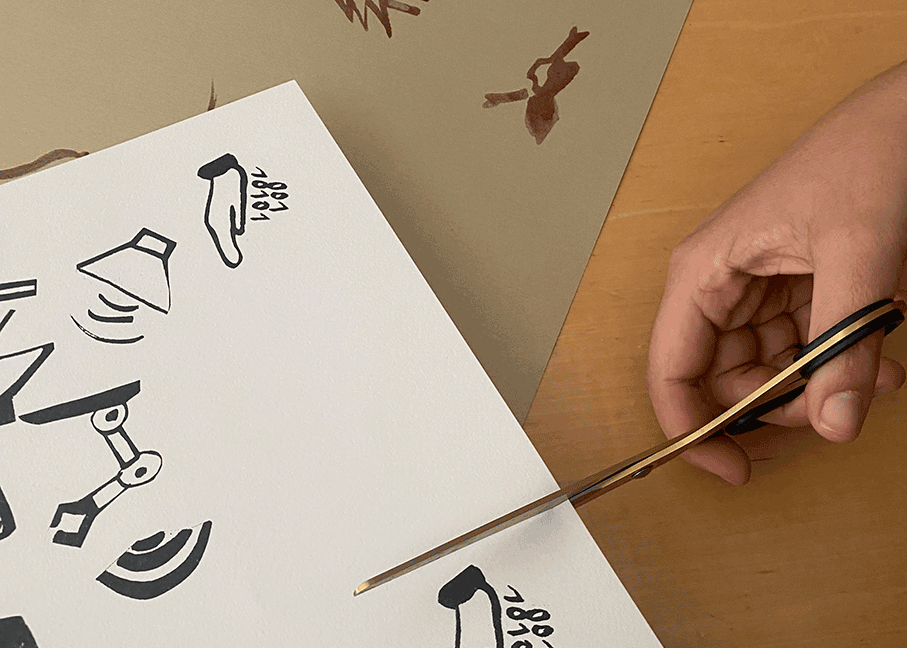
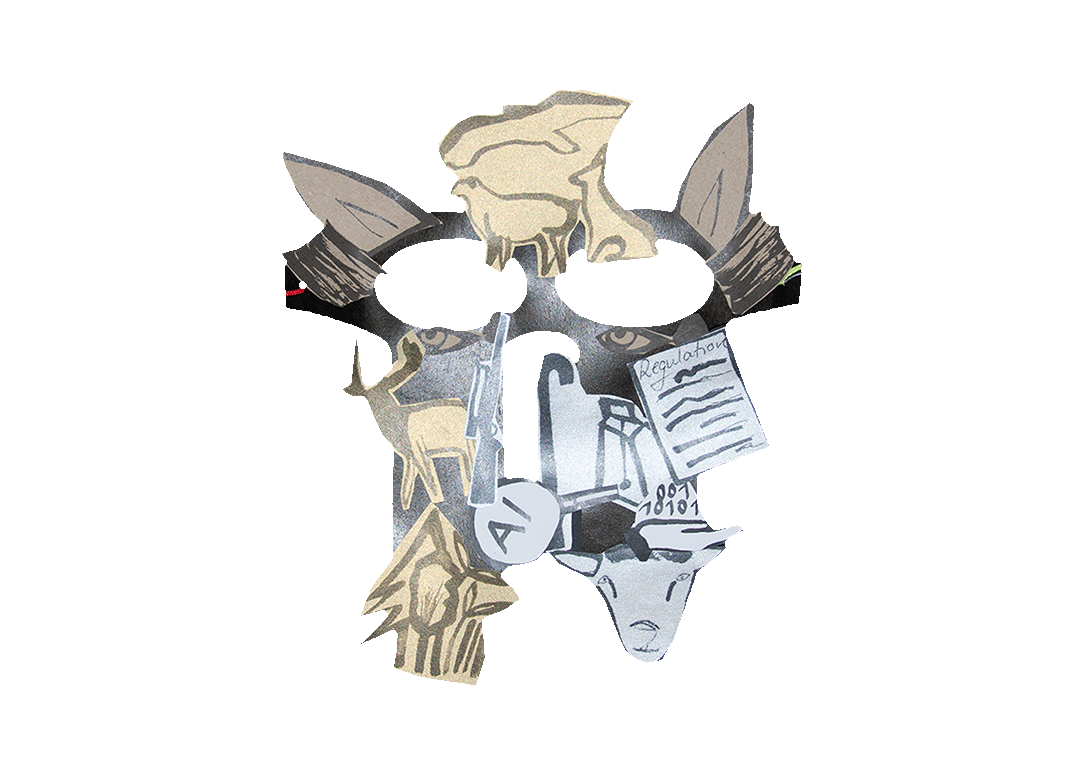
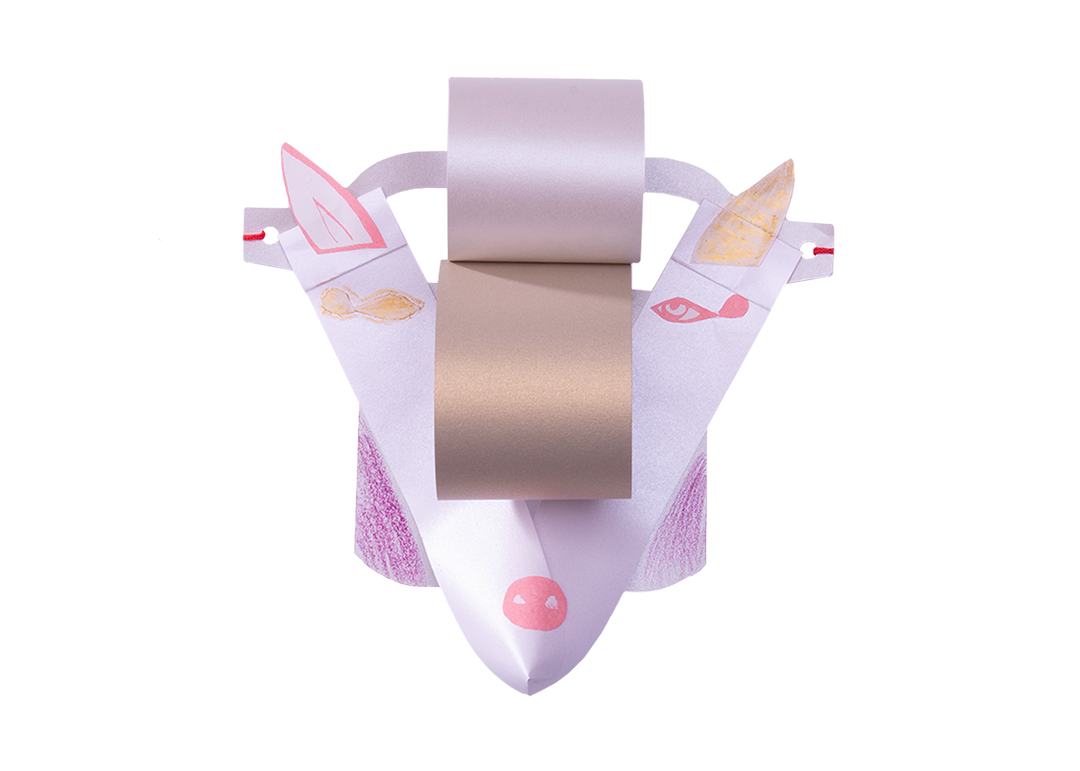
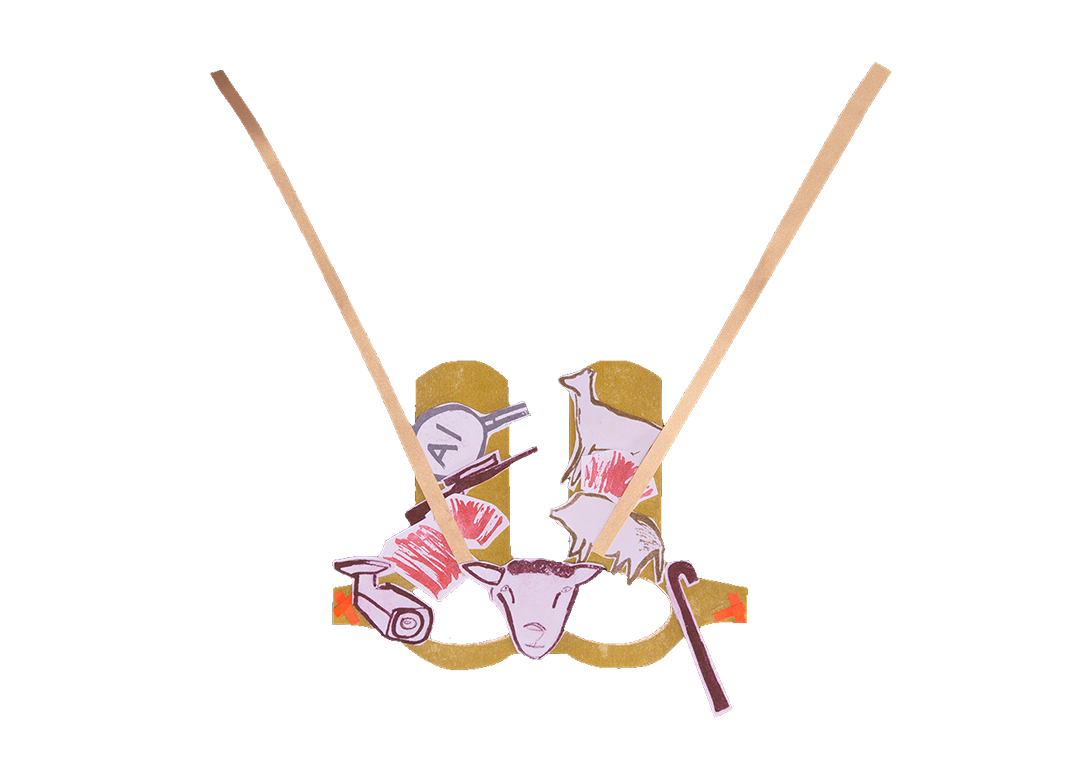
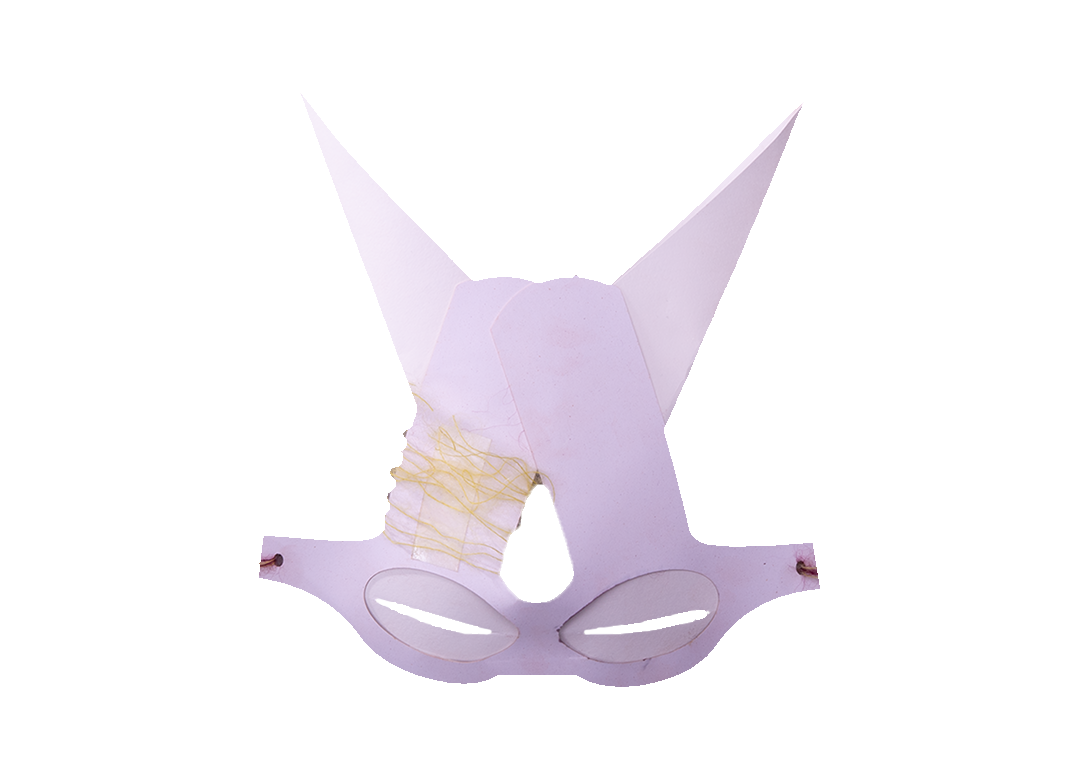
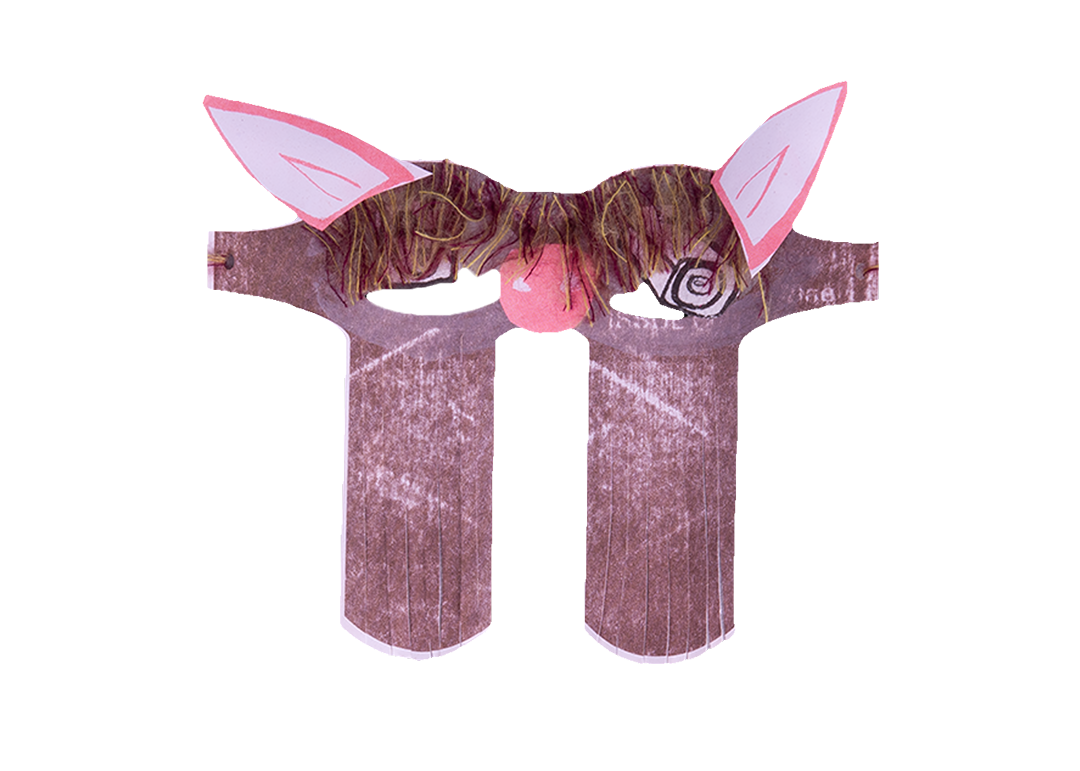
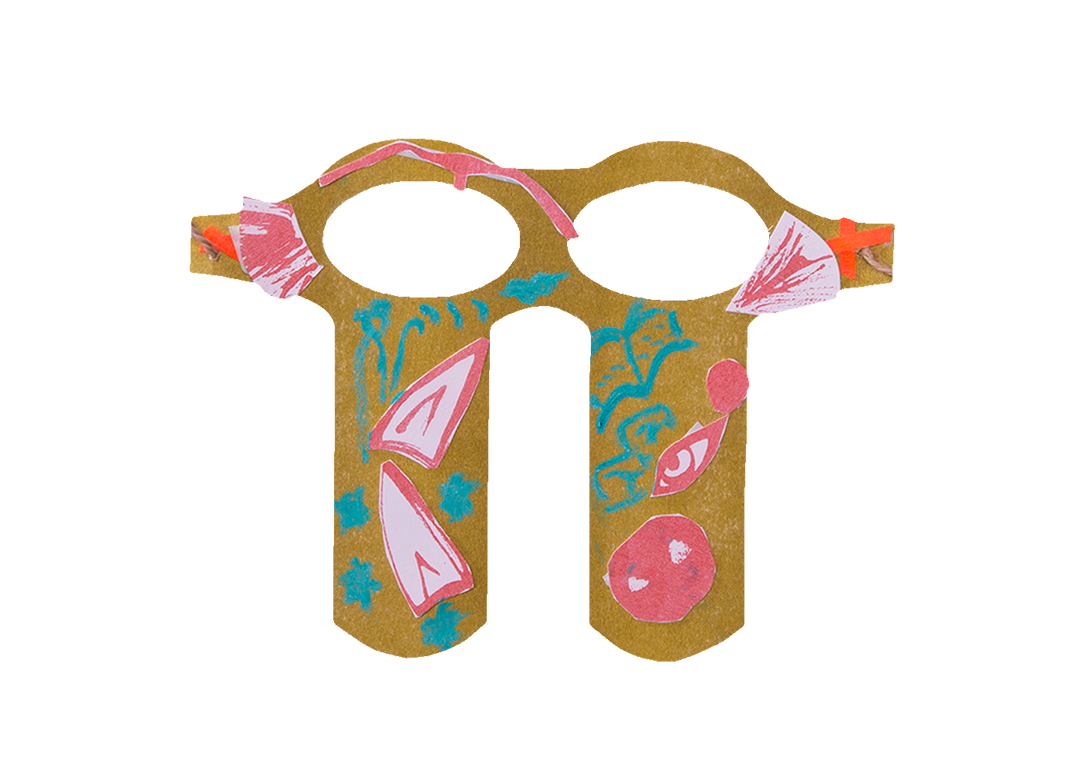
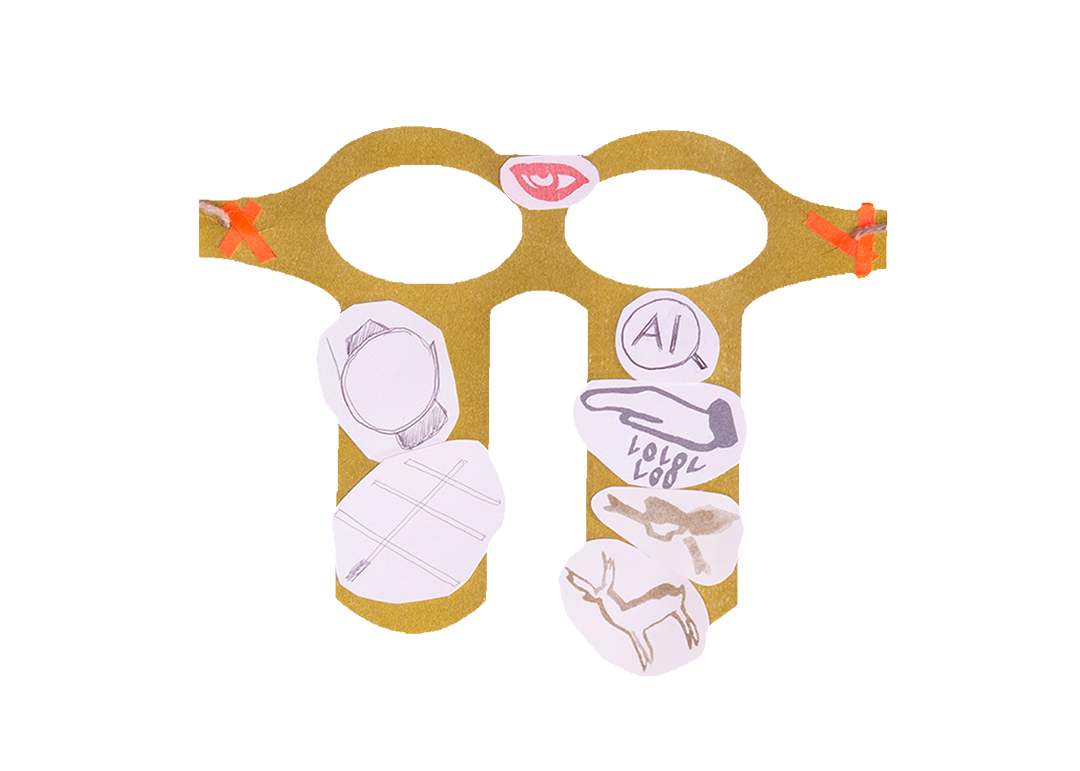
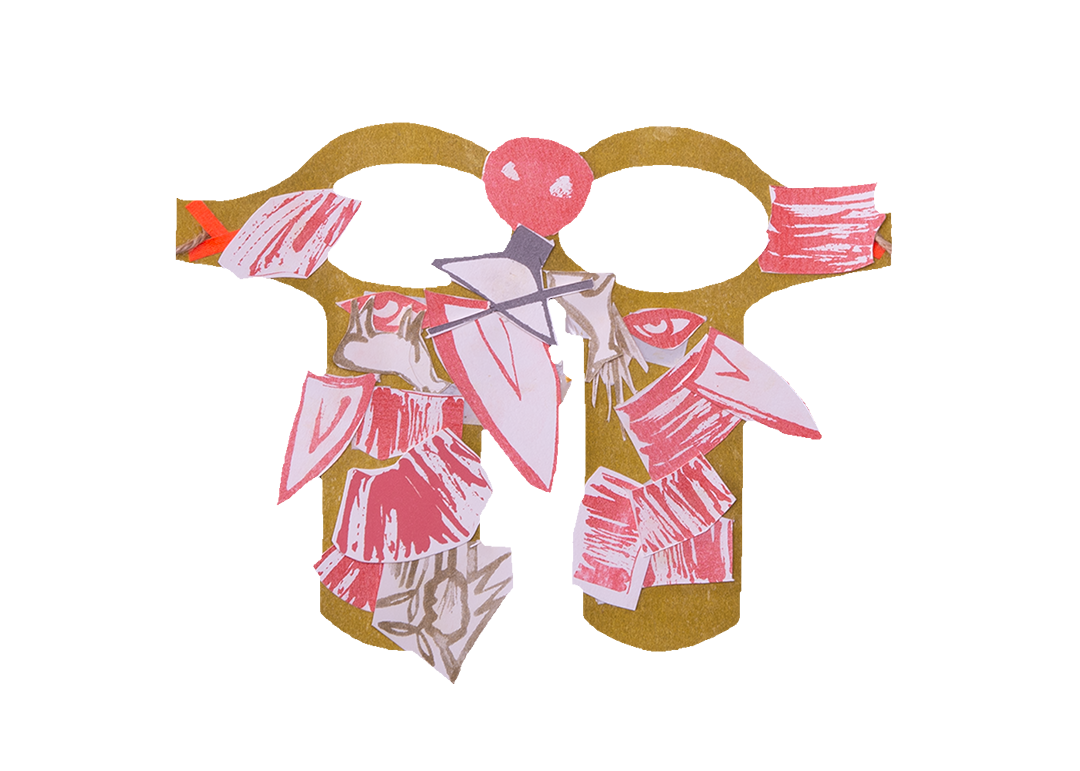
We created a modular crafting practice with hand-drawn fish and wolf parts, habitat elements, and a laser-cut paper base. Crucially, cut-outs include not only anatomical features (fur, nose, eyes, fins, fish scales) but also relational technologies (electric fences, camera traps, underwater cameras, drones, AI) emphasizing interconnection rather than isolated species. Visual elements expand beyond fish and wolves to include flora and fauna, humans, and other wild animals, representing entire habitats. This shift emphasizes relational ecosystems and reflects a more-than-human understanding of coexistence.
The practice is not static but evolves through use. Interlocutors can add hand-drawn elements that become part of future encounters, creating a growing, collaborative archive of visual possibilities. The laser-cut paper construction makes the practice accessible and reproducible.
The mask’s design deliberately leaves human sensory organs and skin visible, keeping them as active parts of the assembly. This prevents complete transformation and maintains a liminal state ‒ participants are neither fully human nor fully other, but in dialogue between positions.
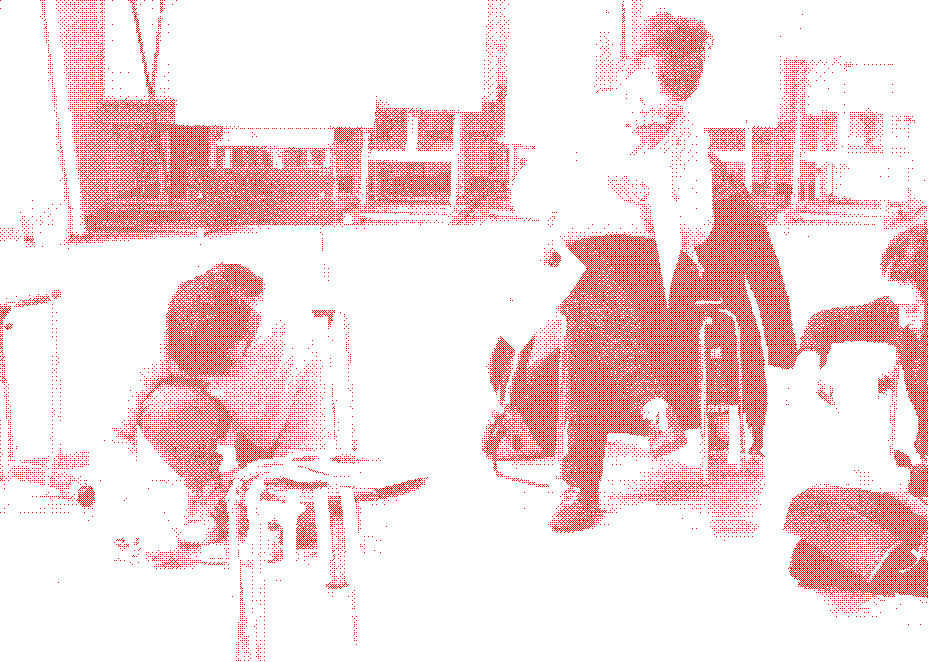
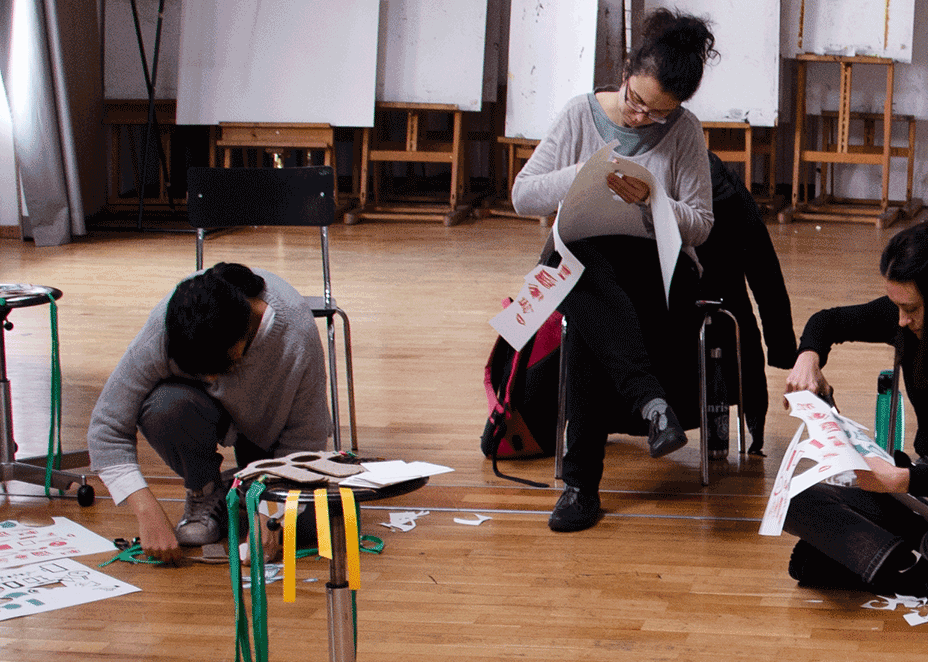
Encounters
Each encounter unfolds over approximately three hours, structured in distinct yet flowing phases. In the first, interlocutors share their professional experiences and expertise. In the second, they engage in the crafting and storytelling process. In the third, space is created for sharing experiences between interlocutors paired in groups of two or three.
I.
The encounter begins with a round of introductions during which interlocutors share their expertise and professional experiences, focusing particularly on their working with freshwater fish or wolves. Though this may appear to be a simple introduction, it provides essential grounding ‒ allowing all interlocutors to articulate their perspectives from their professional positions.
II.
Following a brief break, the host of the encounter (an artist, anthropologist, designer, ecological engineer or other) presents the masking practice, explaining its elements and process. The host then guides and observes as interlocutors engage in crafting. Depending on the situation, also the host can join the interlocutors in mask-making.
This becomes an individual; contemplative activity carried out in silence. Through the focused process of selecting, cutting, and assembling mask elements, interlocutors enter an intuitive state, accessing experiences and often concealed perceptions. As they craft, they reflect on and take notes about three guiding questions:
‘Who are you? What do you need? How can we co-exist together?’
Throughout the crafting process, the host of the encounter provides materials and assistance as needed.
III.
Once all interlocutors have completed their masks, the host invites them to put the masks on and share the stories that have emerged in response to the guiding questions. The encounter concludes with interlocutors removing their masks and engaging in a final round of discussion and reflection between a single interlocutor and the host or between paired groups of two or three.
The combination of verbal exchange and embodied making opens new modes of articulation and perception. Masking prompts reflection on the design of technological artifacts embedded in multispecies contexts, fostering consideration of how humans and more-than-humans might flourish together.